MSc INSIGHT - Interdisciplinary Social Research
| ECTS 120 |
Duration 2 years |
Language English |
Regime In-person |
Schedule Daytime |
Places 20 |
Tuition Fees 1st curricular year: 1,200.00 € 2nd curricular year: 1,100.00 € |
ANNOUNCEMENTS
The 3rd call for applications is open until 30 June 2026.
More information available on the Notice.
Welcome to the MSc INSIGHT - Interdisciplinary Social Research
The ICS-ULisboa presents the new Master's INSIGHT - Interdisciplinary Social Research that will begin in the academic year 2026/2027.
This degree will be taught exclusively in English.
Detailed information may be found on this page and in the brochure.
- Welcome Message from the Director of the ICS-ULisboa
- Message from the Master's Coordinator
- Objectives of the Programme
- Target Audience
- Employability
- Scientific Committee of the Programme
Welcome Message
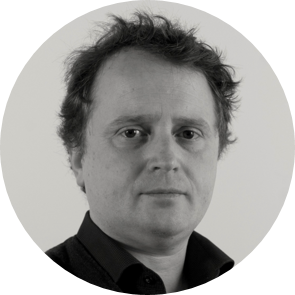
from the Director of the ICS-ULisboa
|
Marina Costa Lobo |
The Institute of Social Sciences, an Organic Unit of the University of Lisbon, an R&D Unit and Associated Laboratory of the Foundation for Science and Technology (FCT), is an internationally renowned research centre. Here, innovative research is carried out on contemporary societies, addressing their legacies and facing their challenges, while promoting excellence in research and dialogue between science and society on topics related to Inclusion and Vulnerabilities, Citizenship, Sustainability and Memories and Legacies. |
Message from the Master's Coordinator
|
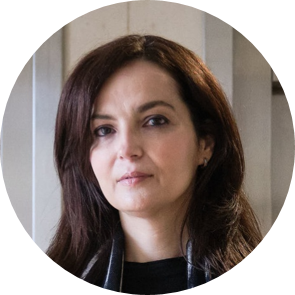
Alice Ramos |
Welcome to our MSc INSIGHT - Interdisciplinary Social Research! This Master's programme stands out in the postgraduate training offer of the University of Lisbon by offering a course entirely in English, oriented towards research in Social Sciences from a multi-methodological perspective, using advanced tools for quantitative, qualitative and mixed data analysis. Specifically, it allows combining: thematic research in Social Sciences (ICS-ULisboa) with programming in Data Science (FC-ULisboa) and Population Science (ISCSP-ULisboa). |
Objectives of the Programme
General Objectives
The Master's INSIGHT - Interdisciplinary Social Research offers specialised training in the introduction to Social Science research, firmly grounded in empirical research methods, centred around the studies conducted by researchers at ICS-ULisboa. The course promotes active citizenship, questioning disciplinary boundaries, stimulating creativity and critical analysis of social phenomena. By addressing topics such as sustainability, inequalities and digital transformation, among others, the course promotes student engagement in fundamental cultural and ethical issues, contributing to the training of excellent professionals and researchers equipped for the challenges of the 21st century.
The programme's general objectives are based on three fundamental pillars:
- Interdisciplinary approach - providing excellence in social science training that allows for the analysis of complex social phenomena from different methodological perspectives;
- Research capacity building - anchoring the Master's in research carried out within the thematic areas of ICS-ULisboa, such as Inclusion and Vulnerabilities, Citizenship, Sustainability, and Memory and Legacies, as well as specialisations at FC-ULisboa and ISCSP-ULisboa, specifically data science and population sciences;
- Internationalisation - taught in English, aimed at integration into international academic networks and partnerships.
Learning Objectives
- Knowledge - in-depth understanding of the main theoretical-methodological frameworks in social science research, including qualitative, quantitative, and mixed approaches; interdisciplinary knowledge on topics such as Inclusion and Vulnerabilities, Citizenship, Sustainability, and Memory and Legacies; familiarity with the various social sciences developed at ICSULisboa, as well as Data Science (FC-ULisboa) and Population Sciences (ISCSP-ULisboa);
- Skills - formulating research questions and developing a research project; selecting and applying appropriate research methods; experimenting with the integration of different areas of knowledge in interdisciplinary approaches;
- Competencies - autonomy in creating a personal academic and research pathway, developing essential methodological and analytical skills for further academic progression and future integration into the job market.
Target Audience
The Master's INSIGHT - Interdisciplinary Social Research, taught in English, welcomes applications from recent graduates in social sciences, or other scientific fields (Social Sciences and Humanities, Life Sciences and Engineering), who are interested in deepening their knowledge both in terms of methods and various themes surrounding contemporary social challenges.
We are particularly interested in candidates with intellectual curiosity and openness to differentiated learning in an academic environment of rigor, freedom, pluralism and autonomy.
Employability
This Master's programme prepares students for a wide variety of professional opportunities in the public, private, and non-profit sectors, both nationally and internationally.
The course provides students with advanced and interdisciplinary skills suitable for roles in research and innovation, public policy analysis and strategies, project management, consulting, and the interfaces between science and society.
It also provides a solid foundation for pursuing studies, teaching, and other research-related professions.
Scientific Committee of the Programme
| Coordinator | Alice Ramos |
| Members |
Annarita Gori |
![]() |
Alda Botelho Azevedo |
![]() |
Alice Ramos |
![]() |
Ana Delicado |
![]() |
Andrés Malamud |
![]() |
Ângela Barreto Xavier |
![]() |
Annarita Gori |
![]() |
Anne Cova |
![]() |
António Branco |
![]() |
Cátia Pesquita |
![]() |
Chiara Pussetti |
![]() |
Clara Saraiva |
![]() |
Cristiana Bastos |
![]() |
Edalina Sanches |
![]() |
Filipa Lowndes Vicente |
![]() |
Filipe Carreira da Silva |
![]() |
Inês Ponte |
![]() |
Iracema Dulley |
![]() |
Isabel Corrêa da Silva |
![]() |
João Vasconcelos |
![]() |
Lara Tavares |
![]() |
Lea Heyne |
![]() |
Luís de Sousa |
![]() |
Marina Costa Lobo |
![]() |
Marta Vilar Rosales |
![]() |
Mónica Truninger |
![]() |
Nuno Domingos |
![]() |
Olivia Bina |
![]() |
Pedro Figueiredo Neto |
![]() |
Pedro Magalhães |
![]() |
Ramon Sarró |
![]() |
Ricardo Roque |
![]() |
Roberto Falanga |
![]() |
Rui Costa Lopes |
![]() |
Sara Madeira |
![]() |
Simone Tulumello |
![]() |
Sofia Aboim |
![]() |
Susana de Matos Viegas |
![]() |
Vanessa Cunha |
![]() |
Verónica Policarpo |
![]() |
Vitor Sérgio Ferreira |
![]() |
Vitória Mourão |
The Master's in Interdisciplinary Social Research lasts 2 years, with daytime study, corresponding to a total of 120 ECTS.
It includes a mandatory common component that provides a comprehensive theoretical and epistemological overview of debates on contemporary societies developed in various areas of the Social Sciences, as well as advanced methodologies for analyzing qualitative, quantitative, and mixed data.
The three schools offer a set of elective courses, allowing students to deepen their methodological and theoretical knowledge in the various thematic areas of the ICS, enabling the construction of multiple educational pathways.
1ST YEAR - 1ST SEMESTER
| Curricular Units | ECTS |
| Research Design I | 6 ECTS |
| Interdisciplinarity in Social Sciences: Theories and Approaches | 6 ECTS |
| Methodology of the Social Sciences | 6 ECTS |
| Advanced Studies Seminar in Social Sciences I | 6 ECTS |
| Conditional Unit - 1st Semester | 6 ECTS |
1ST YEAR - 2ND SEMESTER
| Curricular Units | ECTS |
| Research Design II | 6 ECTS |
| Interdisciplinary Research in Social Sciences | 6 ECTS |
| Conditional Unit - 2nd Semester | 18 ECTS |
CONDITIONAL UNITS
| Curricular Units | 1ST S | 2ND S | ECTS |
| Content and Discourse Analysis | X | X | 3 ECTS |
| Analysis and Visualisation of Quantitative Data | X | X | 3 ECTS |
| Population Sciences: Concepts, Models, and Thought | X | 6 ECTS | |
| Social Epidemiology | X | X | 6 ECTS |
| Fundamentals of Data Science | X | 3 ECTS | |
| Programming Fundamentals | X | 6 ECTS | |
| Social Imagination | X | X | 3 ECTS |
| Natural Language Interaction | X | 6 ECTS | |
| Historical Analysis Methodologies | X | X | 3 ECTS |
| Ethnographic Research Methodologies | X | X | 3 ECTS |
| Participatory and Collaborative Methodologies | X | X | 3 ECTS |
| Creative and Artistic Methods | X | X | 3 ECTS |
| Archival Research Methods | X | X | 3 ECTS |
| Numbers that Count: Quantifying the Population | X | X | 6 ECTS |
| Data Mining | X | 6 ECTS | |
| Contemporary Themes: Citizenship | X | X | 3 ECTS |
| Contemporary Themes: Inclusion and Vulnerabilities | X | X | 3 ECTS |
| Contemporary Themes: Memory and Legacies | X | X | 3 ECTS |
| Contemporary Themes: Sustainability | X | X | 3 ECTS |
2ND YEAR
| Curricular Units | Duration | ECTS |
| Dissertation Development Seminar I | 1st Semester | 6 ECTS |
| Dissertation Development Seminar II | 2nd Semester | 6 ECTS |
| Advanced Studies Seminar in Social Sciences II | Annual | 12 ECTS |
| Dissertation | Annual | 36 ECTS |
Accreditation
Applications
2026/2027 Applications
1st Call
- Application submission: 12 February to 12 March 2026.
- Interviews: 30 March to 2 April 2026.
- Publication of results: until 6 April 2026.
- Deadline for complaints (preliminary hearing): up to 10 working days after publication.
- Registration period: 10 days after application approval.
2nd Call
The 2nd call of applications will only take place when the number of vacancies is not completed by the enrolment of applicants admitted in the 1st call, and only for the vacancies that are have not yet been filled.
- Application submission: 23 March to 27 April 2026.
- Interviews: 11 to 15 May 2026.
- Publication of results: until 29 May 2026.
- Deadline for complaints (preliminary hearing): up to 10 working days after publication.
- Registration period: 10 days after application approval.
3rd Call
The 3rd call of applications will only take place when the number of vacancies is not completed by the enrolment of applicants admitted in the 2nd call, and only for the vacancies that are have not yet been filled.
- Application submission: 11 May to 30 June 2026.
- Interviews: 6 to 10 July 2026.
- Publication of results: until 24 July 2026.
- Deadline for complaints (preliminary hearing): up to 10 working days after publication.
- Registration period: 10 days after application approval.
Applications through the ICS FenixEdu platform: https://fenix.ics.ulisboa.pt.
To create a registration, please access https://fenix.ics.ulisboa.pt/accountCreation.
In case you already have a registration, you can recover the access at https://fenix.ics.ulisboa.pt/passwordResetRequest.
In case you already have a student number at ICS, you should use your Campus account credentials. You may recover your access to this account at https://utilizador.ulisboa.pt.
The application fee is €50.00.
Requirements
The following may apply for admission to the study cycle:
- Holders of a bachelor's degree or equivalent in Social Sciences and Humanities, Life Sciences, and Engineering, with a minimum final grade of Good (14/20) or equivalent;
- Holders of a foreign higher academic degree, in the fields mentioned in 1.1., awarded following a first cycle of studies organized according to the principles of the Bologna Process by a State adhering to this Process;
- Holders of a foreign higher academic degree in the fields mentioned in 1.1. that is recognised by the Selection Jury as satisfying the objectives of the bachelor's degree;
- Holders of an academic, scientific, or professional curriculum that is recognised by the Selection Jury as attesting to the capacity to undertake this study cycle.
Students with incomplete diplomas may enrol conditionally, provided they meet the conditions for obtaining the degree before the start of the academic year.
The applications must be submitted with the following documents:
- Certificate of bachelor’s or equivalent qualification, including academic records with grades obtained and respective grading scales from the institution that awarded the qualification. Under Decree-Law no. 66/2018, of 16 August, conjugated with Ordinance no. 33/2019, of 25 August, and Ordinance no. 43/2020, of 14 February, if the bachelor’s degree has been obtained abroad, the applicant will have to present one of the following documents:
- Document proving the award, by a Portuguese Institution, of the recognition or equivalence or registration of the academic degree; or
- Document proving that the request for recognition of the degree has already been made. This request must be submitted by the deadline for receiving applications, inclusive.
- Curriculum vitae detailing the academic, scientific and/or professional background (in English);
- Personal statement specifying the objectives that motivate the application to this study cycle (in English).
Admission
Places: The number of available places for this Master's is 20.
Candidates will be ranked according to the final classifications assigned to the applications by the Selection Jury and expressed on a scale of 0 to 20 points, taking into account the following criteria:
- Holders of a bachelor's degree or equivalent in Social Sciences and Humanities, Life Sciences, and Engineering, with a minimum final grade of Good (14/20) or equivalent, holders of a foreign higher academic degree in the fields above awarded following a first cycle of studies organized according to the principles of the Bologna Process by a State adhering to this Process, and holders of a foreign higher academic degree in the fields above that is recognised by the Selection Jury as satisfying the objectives of the bachelor's degree:
- Academic curriculum (55%);
- Scientific and/or professional curriculum (15%);
- Personal statement (15%);
- Interview (15%).
- Holders of an academic, scientific, or professional curriculum that is recognised by the Selection Jury as attesting to the capacity to undertake this study cycle:
- Scientific and/or professional curriculum (55%);
- Personal statement (20%);
- Interview (25%).
The interviews will be conducted in English by, at least, two members of the Selection Jury via videoconference.
After evaluating the applications according to the criteria and weightings defined, the Selection Jury will proceed to rank the applications in descending order of their final classifications.
Candidates whose final application score is equal to or greater than 11 points and whose ranking number in the final ranking is less than or equal to the number of places set, in the first application call, or the remaining places from the previously completed calls in the 2nd and 3rd application calls, will be admitted.
Candidates whose final application grade is equal to or higher than 11 points and, cumulatively, whose order number in the final ranking is higher than the number of places available for each call will be placed on the reserve list.
Candidates placed on the reserve list will be admitted for any vacancies that may arise after the registration deadline, in ascending order of their ranking number in the final list.